The Tram
My mother has a pen that she keeps in the cabinet. You would probably think that everyone has a pen. It's just a device used to apply ink to a surface. To this I would tell you that this particular pen is extraordinary. It's a metal solid-ink fountain pen that uses water-based liquid ink delivered through a nib. There are some golden letters on it: Penkala-Moster. Penkala-Moster was one of the biggest pen and pencil factories in the world hundred years ago. This pen, I would tell you, is extraordinary and a precious, not because it is very old, but because of a story that lies behind it. This pen is a family relic and it was given to Ivan, my great grandfather by one high-ranking criminal.
It is a true story, it was told to me by my grandmother, Antonina Garden and it happened in the second decade of the twentieth century in Soviet Russia, in Petrograd, today's Saint Petersburg.
Ivan loves trees and can spend hours walking in the forest among spruces and pines. He normally chooses a tall woody plant with big branches, puts his hands around the trunk, the same way a young chap hugs a woman and stands like this for some time, breathing together with the green gIvant. Yes, Ivan likes for a moment to slip from the upheaval, and the ruined reality into the world of trees. He thinks they are marvellous, warm and peaceful species which mind their own business, don’t fight, and don’t shoot. There isn’t any clutter, chaos or rush among them, only tranquillity and calmness. There aren’t many trees in Petrograd, only rotten, cold buildings and shots from the guns.
People from Fontanka Embankment call Ivan ‘Garden’. They call him this because the garden in spring is fresh and bright. ‘Look, Garden is walking,’ they say. And that’s why when Ivan applied for a new passport, he said his surname was ‘Garden’. He asked to change his wife’s passport too. Ivan is a strong chap, like his father, Peter, who was a Tsar groom, a head of the First Horse Guild. He used to say, ‘Happiness is not a horse, you cannot harness it’. Peter was killed just after the Revolution, by a stray bullet. Ivan’s oldest brother, Fedor, is a passionate lad, a Red Army Commissar who fights for the Soviet Power and Socialism. Ivan’s middle brother, Pantelemon, is a passionate man too, he fights for law and order and the salvation of Russia, against the Bolsheviks and the Red Army. Ivan is twenty three, he is married and works in the Soviet Secret Police Service called Cheka. The truth is Ivan always intended to be a farmer rather than a chekist. Becoming an agent had all started as a favour for Fedor. ‘Can you help me investigating one matter,’ Fedor asked once. Why not, thought Ivan who just can’t say ‘no’ to his respectable brother.
‘Oh, Anna, could you just imagine how wonderful it’s going to be to live in the village, in a big, wood house with a garden and chickens running around and a smell of hot corned beef hash bread and crusty cinnamon rolls coming from the kitchen,’ Ivan says looking at his wife, a German teacher. She is a tall, well built woman with curled hair at the forehead and high lace boots. ‘We are going to make homemade cheese, the one with big holes inside, and homemade sausages from several kind of meat we smoke for several days. Ivan closes his eyes, imagining the pressing machine for cheese and the smoke equipment for sausages.
‘Are we going to have a Christmas tree?’ Anna says.
‘Yes, of course, a tree,’ Ivan says. We will decorate it with sweets, liquorice pastilles and red apples. On Christmas day kids are going to win these sweets, dancing and singing and doing different kind of tricks. Ann, can you just imagine children dancing and singing, like little angels, actors and actress of Christmas? How many kids do you want?’ Ivan says pulling Anna closer. Tomorrow, Ann, I’m going to get our new documents and the money my father left me and then, perhaps, we are going to make our secret plan true.’
An Electric tram, like an enormous, rumbling metal cockroach is running along the streets of frozen Petrograd. People choke in the throes of hunger, the homeless are estimated at up to seven million, approximately six percent of the population of Russia. The wind stings; the wintry, wet blizzard swallows the sore. A top cable creaks, wires above the route make unusual squeaking noises. All kinds of passengers gaze through the windows: a matronly woman with two little kids, who are infolded in shawls; pretty round-faced girls, soldiers in grey coats and grannies in felt boots. The tram swerves around a bend and a group of homeless kids pile onto the tram, taking a ride, shoving one another and people around and talking noisily. It would be hard to say exactly how old they are. One must be less than seven, but they all have eyes that have seen enough.
Ivan stands in the middle of the carriage, between two rows of seats. He glances at Mustafa, the smiley boy with a shaggy head and in a scarf around his neck who seems to be a leader of the gang. The most exciting thing about Mustafa is his finest bend leather boots. These American boots are the only things that were left to Mustafa from his dad after Bolsheviks executed him near Kakhovka. Many kids are jealous of these leather boots, but who would mess with a boy who looks like a bull. Yes, this is a boy people don’t mess about with, not the chekists, not the brothers, bandits, or the strangers. Criminals also know that Mustafa keeps a really good revolver under his shirt. He got it when he studied at Military School. ‘If anything went wrong with the Nagant M1895, you could fix it with a hammer,’ Mustafa normally says. Mustafa is suspected of the burglary of twenty shops, and had twelve arrests. Apart from that he is a really kind hearted and orderly chap, a humanist. Mustafa observes the carriage rolling himself a cigarette.
Kids observe a girl.
‘Whao! Look at this flimsy frail, glimpse of perfect womanhood.’
‘Cutie, chubby cheeks would you like a ride with our Mustafa the BrillIvant? Isn’t he a handsome chap?
The girl moves towards the back door.
‘Oh, come on, mamsell, how about a little tenderness.’
‘I bet she’s never done the business.’
Homeless kids jostle through the carriage, like a fast stream, following the scared girl. Other passengers strain to give them way. The tram slows down, like it’s struggling to cope with the extra weight. Ivan furrows his eyebrows.
‘Hooligans and pickpockets are coming through, move.’
The boys are in the middle part of the carriage. Ivan pushes his suitcase closer using the chance to wangle himself a bit more space, but that doesn’t work. Ivan is in the grasp of the kids, then Mustafa steps on his foot. Ivan looks up and catches the boy staring. He stepped on purpose, Ivan thinks. Next moment a push and Ivan’s suitcase opens. He tries to grip his stuff, but some items fall down to the floor. Kids laugh.
‘Jesus, look at the bloody mess yeh made!’
‘Oh, Christ, do you need any help? Help him, Smuggle!’
‘There’d be plenty of volunteers, what d’yeh think, Zigan?’
‘Look what a dandy, all in the leather. Whao, what a personality! Pretty rich bod, bastard, bourgeois, buster.’
‘Will yeh stop talking rubbish, come on, hoods.’
Boys get off the tram.
‘My luggage, they took my luggage,’ a fat-faced woman shouts. ‘There was some money inside and two kilos of sugar!’
‘Well, bandits, what can you do?’ a man in a rabbit hat says.
Ivan grabs his top pocket where he put money earlier - gone. Ivan checks another pocket with the documents - nothing inside. His watch, some of his things from the suitcase are missing too.
‘Oh, holy Mother of God, help them,’ an old woman says, making the sign of the Cross.
Ivan gets off the tram. He sits on the pavement, at the Neva Riva bank, looking at the snowflakes that fall down. They look like little chickens that Ivan imagined early, waltzing in the air, one two three, one two three. Ivan, stoop-shouldered hurries up to Nevskiy Prospect. The darkening streets are frozen, stone buildings throw long shadows. Banners look at Ivan from the walls: ‘Hold to the revolutionary pace!’, ‘Why aren’t you in the army?’, ‘The tireless enemy never sleeps!?’ It’s chilly, but Ivan slips off his long flowing black leather coat and harshly pushes it into the suitcase. What use of me as an agent, if I can’t defend myself, he thinks.
Ivan can’t sleep. He told Anna about the stolen papers and moneys on the tram. He sharpens one pencil, than another; soon he has a full cup of them. He again looks at the window, at the withered poinsettia on the sill; again he opens the cabinet drawers and looks at the items inside, taking out some of his agricultural books and some pamphlets with machinery. He gets out his unusual tree seeds collection. Last October Ivan went to the Botanical Garden and collected some acorns, cherry tree stones, corns of red and yellow cedar trees and some eucalyptus fruits. He chose the healthiest, mature trees in groups, so that his trees he wanted to grow will be strong. ‘Anna, do you know that oaks have superior timber qualities for use in house building,’ again and again Ivan tells to his wife. ‘Do you know, anyone can grow a tree, just as anyone from the age of two can paint a picture, but can anyone grow a tree from a seed?’ Five minutes later Anna hears the cabinet close. The room sinks into silence, no single movement from the corner where Ivan sits.
‘Try this,’ Anna says walking towards and putting a plate of cabbage soup on the table. Ivan smells fresh cod-liver oil.
‘Cod-liver oil? I thought you were saving it for a special occasion,’ Ivan says.
‘This is a special occasion. Eat your fill,’ Anna says. ‘Open this, when you finish.’ Anna places a box next to the soup. Ivan unscrews the lid and sees gold jewellery and fine stones.
‘What is it? You never told me about it,’ Ivan says looking at Anna. ‘I thought all your belongings were confiscated with your mansion.’
‘Do you think it’s enough for a new house in the village? I phoned Fedor earlier too, he is a Commissar and your brother. He understood, he is going to help you,’ Anna says.
Several days later Ivan meets with Fedor. ‘Come on, Ivan, shoulders back, get a grip upon yourself!’ Fedor says. ‘You are going to meet the bandits.’
It’s warmer today, snow and rain. A deluge of water streams down the cobblestone pavement. Ivan hears a rumbling noise. Vanka, a little kid in a torn overcoat with a balalaika in his hand, kicks the tin, like a ball and whistles something.
‘Hey!’ cries Vanka.
‘Hey, kid, what do you want?’ Ivan says.
‘Waiting?’ Vanka says.
‘Yes, waiting,’ Ivan says raising the eyes in surprise.
‘Do you have a smoke?’ Vanka says.
Ivan gives Vanka some tobacco.
‘Fancy my balalaika? Forty million. They’d give fifty million for it at the goods market,’ Vanka says, showing his treasure and inserting the cigarette between his well-practiced lips. ‘Nice belt, can I have it for nothing?’
‘No,’ Ivan smiles.
‘Have you ever been in Odessa?’ Vanka says, blowing out a plume of smoke. ‘They have the best peaches in Odessa and girls.’ Vanka is eight, but he is skinny and short, so he looks even younger. Two years ago he was left in a rush on the train station by his mum, who has another eight kids. He’s been travelling ever since. Vanka is a tiny kid so it’s not a problem for him to steal or sneak into the train carriage.
‘Wait, wait,’ Vanka says and walks off.
Cyclops or Grishka, a teenage tall boy, who looks quite sporty, passes through. He is in a sweater, a peak cap and short pants, with a big bag in his hand.
‘Follow me,’ he says leading Ivan to the corner.
‘Which one is yours?’ Grishka says opening the bag with more than a hundred watches inside. Grishka is the specialist of watches, who knows everything about timepieces, personally knows all owners of Petrograd’s watch shops. Grishka, having a sharp eye, is also a skilled horologist who is able to repair or even make a watch. Being a watch expert, he collects and distributes all stolen watches.
‘Two-tone body, “Breitling”. Oh, it has an automatic movement. You have a good one’, Grishka says looking at Ivan’s watch.
‘Yes, it was my father’s, a tsar reward for diligent work.’
‘Wait more,’ says Grishka and walks away.
This time Mr Scot, a man in tiny spectacles, a wool Fair Isle patterned coat, a homburg, a tie and an umbrella, moves along the street.
‘Mr. Garden?’ Mr Scot asks and seeing the smile of approval, passes to Ivan his documents and money. Ivan’s lip raises, eyelids crinkle.
‘Thank you very much,’ Ivan says. He extends his hand for a shake, but in the last moment feels confounded and just pats the man on his shoulder.
‘Is it everything?’ Mr Scot says.
‘I had a pen too.’
‘What kind of pen?’
‘A metal solid-ink fountain pen.’
‘Take this one, it’s a good one. It’s a fountain pen that uses water-based liquid ink delivered through a nib,’ Mr Scot says, passing to Ivan the black colored pen with golden letters inscribed ‘Penkala-Moster’.
Ivan is on the tram again, looking at the rain that pencil lines the air with the clear paint of water. Ivan thinks about life. It runs as this rain - very fast. One second and rain stops, one moment and life... and you know you need to do something to achieve your dreams. You don't live forever. Ivan thinks that now with the money, new documents and Anna’s treasures they will definitely move to the country. Ivan knows that he’s ready for a change, for a new start. Perhaps he needs to grow up and start making decisions for himself in his life.
Anna, opens the door.
‘My dear Anna’, Ivan says. ‘I know now, happiness depends upon ourselves. We could build our own happiness.’
-:-:-:-:-:-:-:-
Yorkshire Dales
The lady of the Moor
 |
Nearly every time passing the Barden Moor in the dusk I slow down my car and start looking for the bird sitting on the stone wall. It normally sits on the same place and gaze at the moorland. The round, black eyes turn into my side and the lady of the moor flaps her wings and slowly flies, hovering over an area of open ground.
Do you think it's the owl? No, it's the barn owl and it's not from the typical owl's family, but from the family Tytonidae. It has the light, distinctive heart-shaped face, long legs and a squared tailed light body that shining in the moonlight.
-:-:-:-:-:-:-:- |
The spirit of the mighty moor
 |
I call the owl the Lady of the Moor. It is the main bird here and the spirit of the mighty moor. It is very difficult to see this bird. Most of owls are nocturnal or crepuscular. Twilight hours of dawn and dusk, cover of darkness, and the time then full moon mysteriously swims in the sky are their favourite. This solitary bird likes to live in the remote areas. Their wings have such specialized adaptations that even sensitive-eared prey animals like mice don’t hear it coming. It is as quiet as a mouse. This night carnivore could be almost invisible.
One of my friends said: "I can't help thinking: what a horrible nightmare would the owls be if our relative size was different? You walk peacefully down a street, suddenly an absolutely silent shadow drops on you from above, your neck is pierced by talons strong as jaws of life and sharp as a woman's hatred... then police detectives have to search for your skull in the predator's regurgitated pellets."
I have seen several types of the owl through my life. This summer I have seen the barn owl more than several times. I also have seen one little owl and a big-headed one. But the most remarkable was seeing a giant snow owl. It looked like a huge, white stone in the middle of the road. The stone suddenly raised massive wings and flew away leaving me with wide open mouth.
The other of my friend said that if you want an adventure don't look for it, go to look for the owl. Have no fear! Go to look for an invisible bird at night. Step into dreamy moonlit dream. Plunge into adventure!
-:-:-:-:-:-:-:-
|
Caves
 |
Caves are the other aspect of the limestone scenery that intrigues me. In the Yorkshire Dales the cave systems are some of the most extensive in Brittain. You could go caving and visit a new cave every day for a whole year. Walking through the cave is something like walking through the rainforest. You could find here lots of underground treasures like: pointed pendants hanging from the cave ceiling called "stalactites", blunt mounds called "stalagmites", very thin but long stalactites called "soda straws", stalactites that have a central canal with twig-like called "helictites", sheet like and found on cave floors and walls formation called "flowstone".
-:-:-:-:-:-:-:- |
Moor and the Red Grouse
Most people who like dramatic scenery think that moorland and bog are bleak, boring area. You need to have a particular constitution of mind and character to be able to see its beauty. You need to look, to listen and to feel the place.
 |
One of the species that grow here is the heather. Heather flowers from July to September covering land with purple-pink blanket. It's look and sound like the sea. It's not just a beautiful shrub, but also a main component of the red grouse diet. Red grouse enjoys new, green shoots. The bird likes hiding between the heather. It sits silent on the ground and flies away only if you come very, very close. It makes the sounds like: grr-grr-grr. So you can't see it, but you could hear it.
-:-:-:-:-:-:-:- |
 |
The Tan Hill Inn
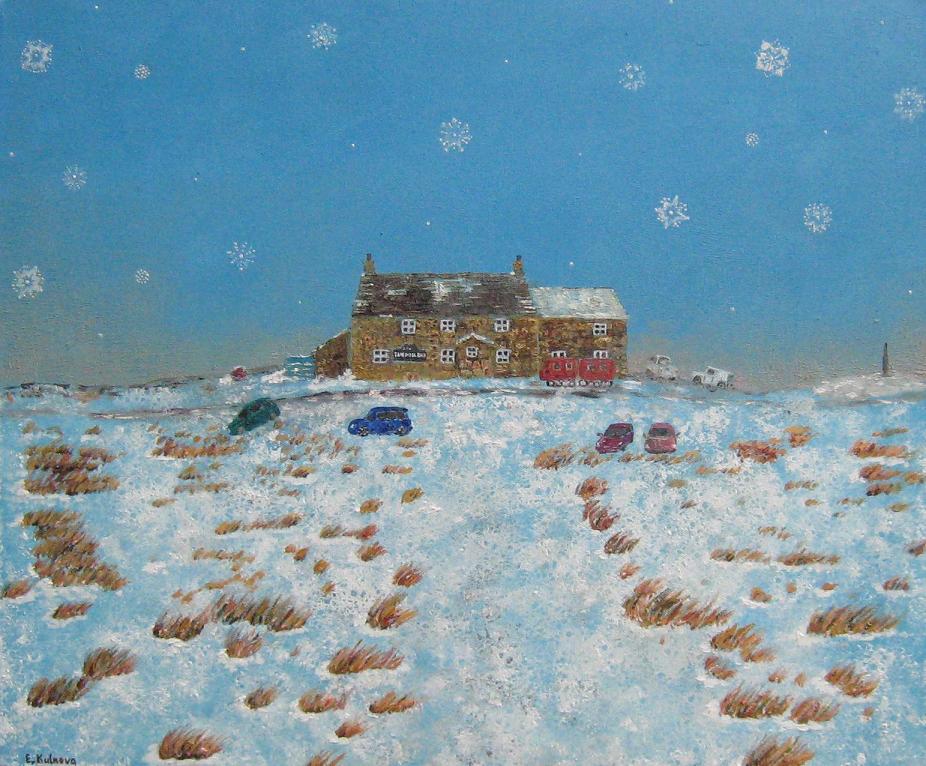 |
The Tan Hill Inn is a very special place, occupying a lonely site, high in the Yorkshire Dales. It is in fact, the highest pub in Great Britain at 1,732ft above sea level. The dog called Sherbet lives there and pub's barmen is a great poet. You could listern him for ages...
-:-:-:-:-:-:-:- |
Christmas time
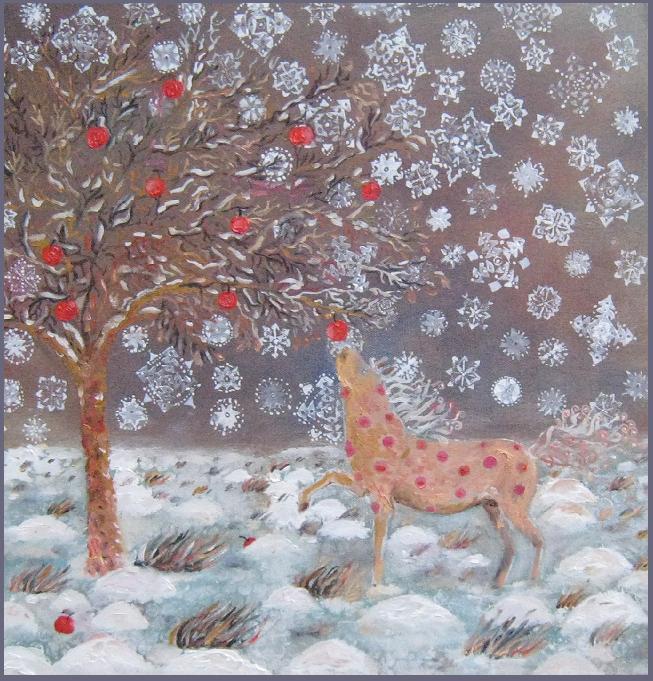 |
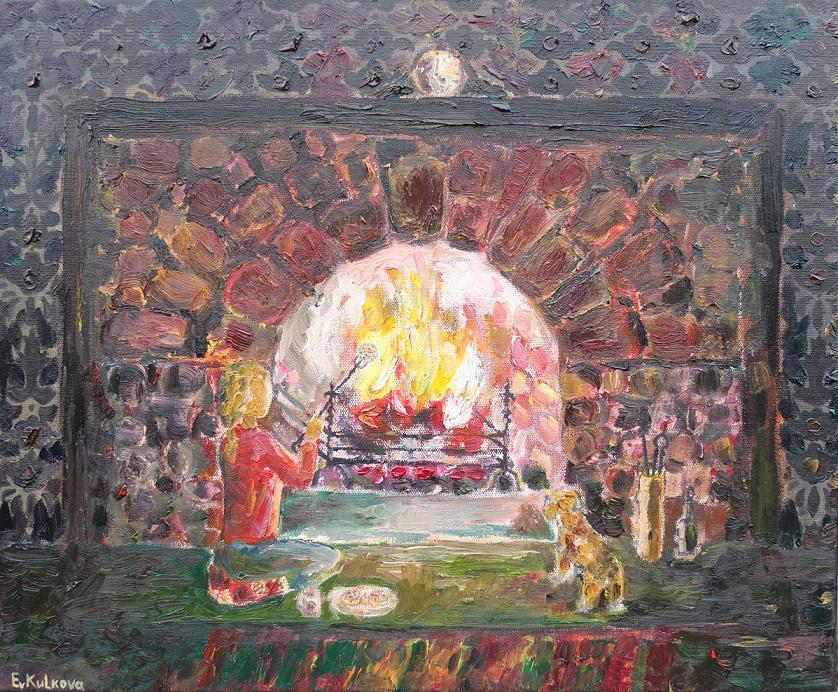
I love Christmas time. It's the time then log fires in the fireplace, Christmas goodies are baked in the oven, the house is gaily decorated with lights and hollies, green tree in the corner of the room, the stockings are hung by the chimney. It's the time of laugh, smiles and joy.
-:-:-:-:-:-:-:- |
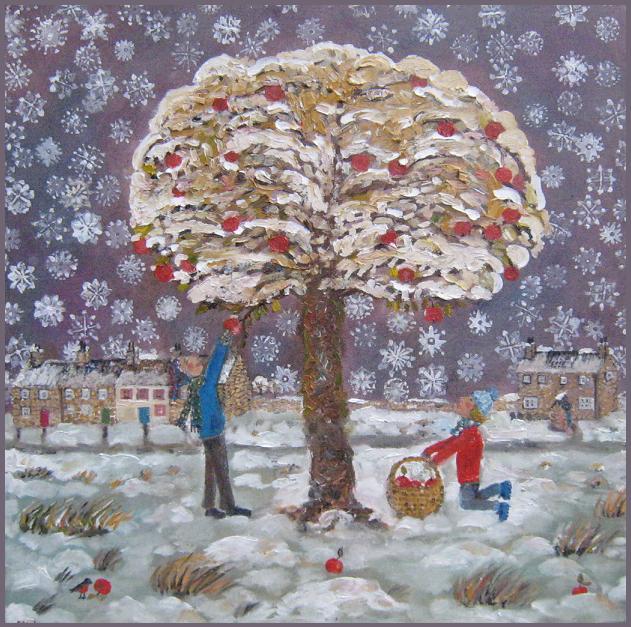 |
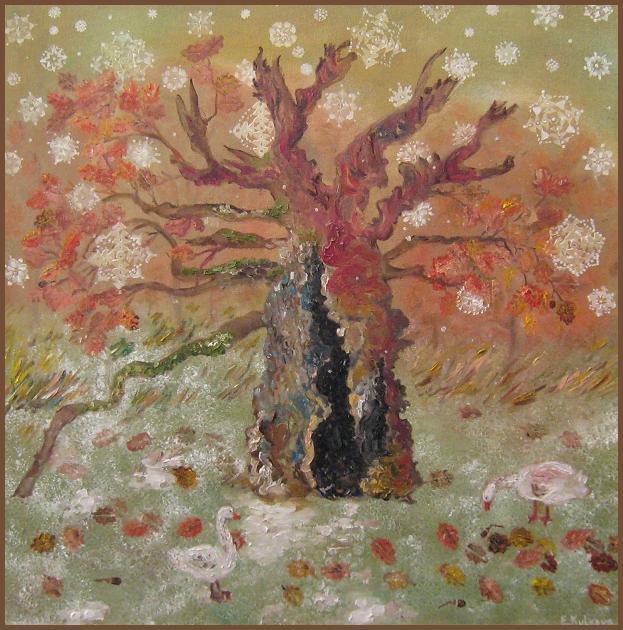
The Laund Oak
The Rain

|
It is raining a lot in England and in Yorkshire Dales. Water gushes from the sky as through from a water-pipe here. But I love the rain.
I like for example listening the rain's song when globules of water patter against the wind screen of her car. This is the mostly remarkable in the driving rain when big drops make the methodical sounds. The rain punches it melody with tremendous gusto. It's something like: turum-turum-turum.
|

|
I adore driving when rain is pelting down. Two synchronized radial type arms - the windscreen wipers wipe the water. The blade is swung back and forth over the glass, pushing rain from its surface and creating additional effect to the melody. I switch on my stereo - one of not laud, harmonious albums. Roulade of music, pitter-pattern of rain, windscreen wipers clip-clop - I become absolutely relax. All my thousand and one small worries of life hide in the dark corners. The rain music shakes it off.

|
I am fond of thunderstorm perturbation. I remember from my childhood an instinctive dread of the vivid flashes. I in a company of my comrades - the other small kids sat in the attic of the log house, in the middle of the forest. We sat trembling with fear, we told each other the scary stories, heard a loud clap of thunder pealed overhead, saw arrows of lightning pierced across the dark sky and felt our hearts beat above the tumult of the severe storm. It was tremendously scary and brilliant. These memories are something that push me to fight my fears.
I enjoy sitting on the stairs of a conservatory and looking at the rain that pencil lines in the air with clear paint of water. I think about life. It runs as this rain - very fast. One second and rain stop. One moment and life... and you know you need to do, to witness, to archive a lot off. You don't live forever.
One of the most excited moments of my life was running under torrential rain in the small port town called Stromness on Orkney Islands, in Scotland. I was caught in the rain entering the town. The deluge of rain was streaming down the cobblestone pavement in torrents. The rain was falling aslant. I could hear the roar of the torrents, the dash of rain on the town's windows. I was saturated, but I was all in the fluster. The energy shoots a way out of me. I thought: I'm alive. And then, already in her room I could hear the commotion of a storm, a stiff breeze roughing up the ocean, the tiger of the azure deep.
I again in the car listening the patter charms of the rain. I'm alone. The rain is pouring - it's great. If there were no clouds, we should not enjoy the sun.
- Hi rain, how do you do today? Where have you been? What have you seen? Whom have you challenged? Have you seen someone in the rain looking for me?
- turum-turum-turum -:-:-:-:-:-:-:-
|
Jura
|
Scotland has over 790 offshore islands. I like ocean and Scottish Islands. My favourite are Shetland Islands and the little isle of Colonsay.
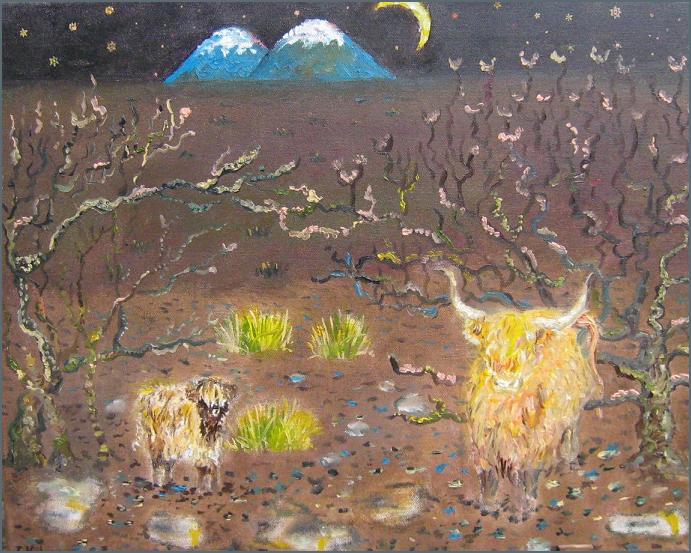
Jura is an island in the Inner Hebrides of Scotland. It has an area of 142 square miles, and less then 200 inhabitants. Dominating the view of Jura from almost any direction are the three, distinctive and easily recognised, Paps of Jura. I was astonished by the Paps. The other thing that blow me away was Jura's peaty whisky and twisted trees that you could see on the picture below. It was the trees from the fairy tale.
-:-:-:-:-:-:-:-:-:-:-:-:-:-:-:-:-:-:-:-:-:- |
 |
In the small stream of smoke

|
Travelling through North West Territories I met two hunters from Germany. They were German policeman Andreas and German farmer Wolfgang. I became friends with them. We travelled together following Demster Highway. In the evenings my hunters turned off the Highway, parked the car and started collect the wood. They normally made a huge fire while I picked the dog rose hips and infused it. Then we sat on the log and sipped tea, gazing at the starry sky.
It's Andrea's birthday next day. He was talking again and again about cigars he prepared for this special ocasion.
- Real Cuban cigars! Could you just imagine? And it's exactly three, for each of us.
- And partridges... exactly three. - added Wolfgan with delight throught the smoky hue of the fire's flame.
My comrades killed some ptarmigans that day. It was very quick and easy to do. They saw the birds, stopped the car and started shooting. First bird fell down. The others didn't fly away. Second bird brought down. The others just looked at it and stayed where they were. We were ended up with three chestnut-coloured bodies and white feet. I looked at birds closely. In winter they camouflaged and change its colour from brown to white.
|
The lucky hunters said they don't think it was accidental that they met me. They believed I brought them good weather and partridges. They even prepared in advance for my attendance. They had three caps, three plates, three spoons... everything in number of three in the trailer. The hunters said they were sent to me for protection. Because who other then they would save the little girl from grizzlies.
We saw more than several grizzlies on Demster Highway. First one - a small silver bear dug something very close to the road. He didn't like our close presence and growled at one moment showing his pointed fangs. The second - a medium size ursus was a comedian. He walked in the relax style, jiggling from side to side. He walked back and forwards the road and then stopped at the "Yukon - North West Territories" sign, stood at his back legs, leaned elbow at the sign's pole and started moving his ass from right to left, like he is dancing Caribbean Salsa. I couldn't stop laughing looking at him. It was unbelievable and very fanny. The third bear was big and serious. He moved through the tundra and looked like the master of the taiga.
'It was my dream to come to Inuvik, to Canadian Arctic,' said Wolfgan putting new log and some twigs to the hungry fire. It spluttered. The tongues of flame started to play in the air, juggling flakes like circus prestidigitator. We felt smoky smell. 'I've been on this highway with my wife five years ago. We nearly reach the town, but the weather became not good and we turned back. I was thinking about this journey all last years... And tommorow my dream come to life. Isn't it wonderful?' said Wolfgan.
The hunters talked and talked and I thought, 'Isn't it wonderful that I'm in a such beautiful place, in a such delighted company.' I also thought about my friends in Yorkshire and in Russia, 'How are they there?'
The Beauty of Arctic

|
A freezing morning, the snow cracks under the feet. The bear walks. The solitary animal notices snow machine and starts chasing, closer and closer with every minute. The roar stuns the Rocky Mountains. Plantigrade paws grab the machine, a second, and the bear is on the top. The massive monster raises its huge claws. The carnivore starts eating me, chewing my arm and putting big bits of flesh into its mouth.
I wake up. It’s a bad dream, I think. I fall asleep again.
It’s the same morning. The bear starts chasing, climbs on the snow mobile, the next moment I take the bear spray and start spraying the killer. The bear falls down. I wake up.
|
 |
First it was an Aurora Boreas, a spectacular, silent explosion of light, bright, violet line. Then a huge moon appeared, highlighting the Earth.
I came to the lake. The chill water tickled my ankles. I went deeper into the water and promptly lathered the body with the soap. I groped for the bear spray, didn't see any animals and recovered my temper. I thought, all bears must be asleep already. I couldn't hear birds, frogs or crickets. Complete silence brooded over the lake and only foxtail or palm-grass whispered in the wind. It was so calmly, so peaceful, so magical and so beautiful round. I felt myself wildly, winy beautiful in all my body and soul.
I came back to Britain. The spider made its net in the corner of my room. A month has passed since the moment at the lake, but I still feel the fine aroma of Arctic. Wild, vehement glory of it became part of me.
-:-:-:-:-:-:-:-
Ride into the sunset

I was inspired to create this three piece art work by the Elk Island National Park and Bowron Lake Provincial Park, Canada.
Elk Island is one of the best places in Alberta for wildlife viewing and home to herds of free roaming plains bison, wood bison, moose, deer, elk and over 250 species of birds.
Bowron Lake that located in British Columbia is known for its rugged and mountainous terrain. The main attraction here is the 72 mile canoe circuit through the Cariboo Mountains, which follows lakes, rivers, and short portages between waterways.
-:-:-:-:-:-:-:-:-:-:-:-:-:-:-:-:-:-:-:-:-:-
Haida Gwaii
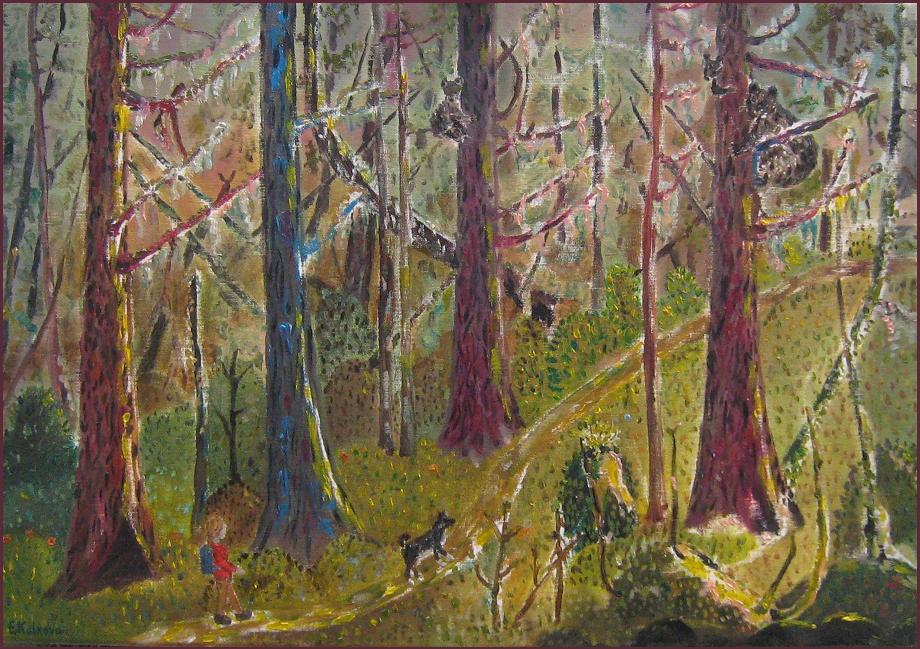 |
"Haida Gwaii" means "islands of the people". They located on the west side of the Canada, in British Columbia. It's a beautiful and unique place.
Walking through the rainforest of the Graham Island, I met raccoon's family. They were hiding from me on the trees behind the old man's beard lichen.
-:-:-:-:-:-:-:- |

Abandoned village.
To the memory of my grandfather: Akimov Ivan Grigorievich.
'The most recent census found that of Russia's 155,000 villages, 13,000 have been deserted, and another 35,000 have seen their populations dwindle to fewer than 10 inhabitants.'
|
“Do you miss Russia?” - somebody asked me.
“Yes” - I answered.
“What do you miss the most?” - asked somebody again.
“My village” - I said.
|

|
It’s a small village - just four houses surrounded by fields and forest. It’s situated 200 miles from Moscow, in the Tverskoy region. My grandmother and grandfather bought a holiday-house there 25 years ago. Grandmother was originally from this area. That was why they chose this place. I remember my grandmother asked: “ Vany,” she called her husband this. “Can you stop the car?” Grandmother went off from the car and stood for a long time looking at the carpet of wild flowers, ocean of yellow fields, ribbon of narrow river, and line of green forest…
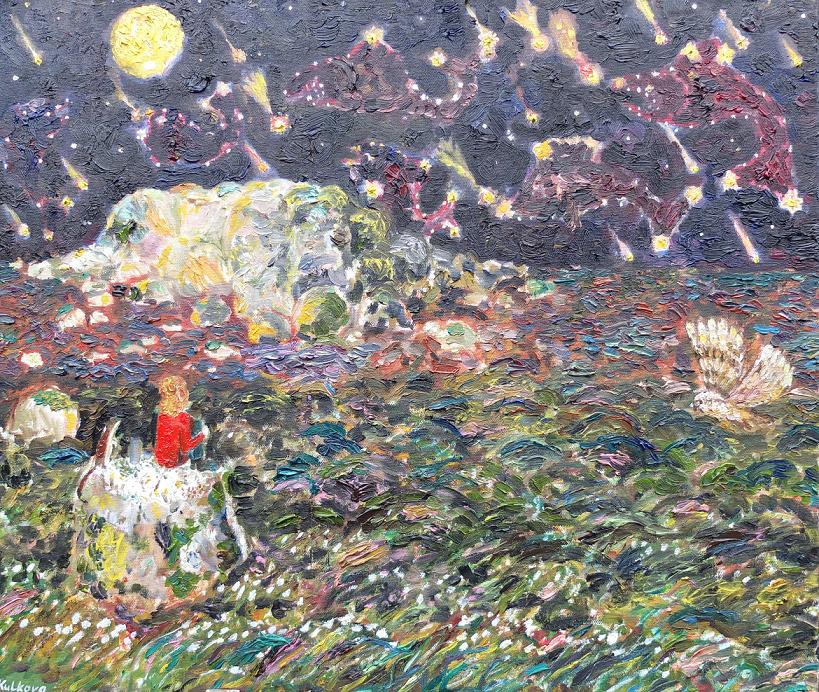
Why do I like this place? It’s difficult to explain. It’s all together: feels, sounds, views, smells, memory, style of life… When you are in the city you are always running somewhere, like a hurrying harrier. In the village you can stop and look round. You can take time and spend it doing something enjoyable. You can do lots of things that in the everyday life you haven’t time for. When you are in the city you haven’t time to sit on the stairs of a conservatory and listen to the rain or look at the stars at night or go out for a walk to admire the views. I enjoy doing it. I like walking and looking at the sunset when the sky changes its colours – blue and red and yellow and purple. And after in the still of night I love looking at the stars, trying to find a falling one.
Moon is also my close friend. Sometimes it’s lighting for me like a huge spotlight and sometimes it’s hiding in the clouds like a skulking spy.
If you get up early in the morning and go out to the field you’ll find yourself soon in the middle of a twinkle carpet or a crystal miniature city. Of course it’s just a field, but use your imagination and look down. You’ll see the dew on the scarlet grass like strings of pearls and spider webs that stretches like glittering cotton. It gives me the creeps then I look at this fantastic “city-carpet”. Do you know how loud the sounds of crickets are? When they start their concert you have the feeling of millions, billions, trillions of little violins playing round you. Some people hate this sound. They have enough of the noise every day of their lives. But I find it very relaxing. Just sit and listen! I also like the frog’s orchestra with the conductor dragon-fly in the pond, and the song of the nightingale.
Of course it’s all very sentimental and silly. But it’s that I love to do as a relief from the effort and stress of everyday life. Sometimes in a busy bus I close my eyes and the village appears like a ghost. Or sometimes a similar sound or smell brings me back to the familiar place. And I feel warm and safe myself.
As you understand I grew up in the city, but every summer I spent in the village. I can say that I was a lucky child.
There were several children of my age in the every house of the village. We were playing from the early morning to the evening.
We built cosy houses and superb castles from old blanket and dry branches. We cooked delicious salads and appetizing soups from wild flowers and dirty
stones. We baked cakes and tarts from road sand and pool mud that were unbelievable tasty. We organised concerts and performances for our parents where
we were modern artists and popular singers. We dressed in the old clothes and coloured our faces, imagining ourselves beautiful princes and powerful kings.
We set up our own competitions where we judged each other like stern umpires. And in the evening was time when we sat round grandmother who told us
the stories from old times, from her childhood.
It was stories about this area and local life. Grandmother told us about Christmas time. She said that just her family had a Christmas tree and that they decorated it with sweets and apples. And on the Christmas day kids tried to win these sweets, dancing and singing and doing different kind of tricks. I just imagine my grandmother dancing and singing… The little actress of Christmas. That’s what she said about herself. “Little Tony, the actress of Christmas.”
She told us about local food. They made homemade cheese with big holes inside. They boiled the milk and after used a special pressing machine. Grandmother said that it was the best cheese that she ever had tried in her life.
They also made homemade sausages. They used several kind of meet that mixed all together. They filled this mixer inside of intestines, and smoked it for several days in the fireplace. I close my eyes and again imagine the pressing machine for cheese, the smoke equipment for sausages… It is so unusual, so uncommon and so unique.
Grandmother also told us about her family. Her father was a good-looking man, very cheerful, light-hearted and sunny. That was why people in the area call him “Garden”. Garden because the garden in spring is very lively, fresh and bright. “Look, Garden is walking,” they said. And that was why when my great-grandfather came to get passport, he said that his second name is “Garden”. My grandmother’s second name was also “Garden”. My great-great-grandfather was a Tsar groom. Grandmother said that he was the best tsar groom. It made her feel proud. The Tsar’s favourite horse was very nasty and great-great-grandfather was the only man who could harness it. He had a secret. Then he harnessed this “devil-horse” he usually used a big metal tongs. He used one hand for holding the horse’s nose with the tongs and used another hand for harness. He was a very strong man. He probably could harness any horse. He also said: “Happiness is not a horse, you cannot harness it”. I think he also was a clever man.
Grandmother didn’t tell much about her mother’s family. All that I know is great-grandmother taught languages. I have a picture of her. It’s dated 1916. A woman in the nice dress, curled hair at the forehead, high lace boots and a watch on her arm stays in front of the studio wall. Many people said that I look like her. It makes me feel happy: to think I have something in common with this woman on the yellow picture. Unfortunately it’s the only picture I have left after my great-grandparents. All other was destroyed in the fire.
Grandmother said that her family was richest in the village. Many people were envious of this. So one man wrote an accusatory letter and sent it to the communists. At the same time one woman in the village heated the bathhouse. She wasn’t very careful. A fire started. The village was burned. My grandmother’s house was also burned. The next day when the communists came to arrest the family and send it to Siberia they didn’t find evidence of wealth. All that they find was ash. Even the big gold box with the jewellery inside – the family treasure disappeared in the fire or became a little gold river that penetrated underground. It’s a strange to think about, but it’s true all the same. The misfortune became happiness for the family. Just because of this silly woman the family avoided arrest. If she hadn’t heated the bathhouse that day, I wouldn’t be here to write this now. A silly woman can change history.
I don’t really believe that all grandmother’s stories were true. I already say that for me it was something unreal, fantastic and dreamy, like fairytales. But it was what grandmother told. It was the kind of thing she liked to tell. There were lots, lots of stories. One off her interesting stories was about abandoned and lost village. It was situated in the middle of the forest. She lived there when she was a little girl before the collective farms formed. The government wanted people be to all together and working all together in the collective farms. That was why people from my grandmother’s small village in the forest moved to the bigger one. Lots of the other small villages were left too. Fifty years later grandmother tried to find her old village. A place can get very deep into your bones. And when you leave it behind, you leave part of yourself. She said that her father liked unusual trees and he had lots of trees like these round the house. “If I find unusual trees in the forest, I find a place where a village was before,” she said. But, of course, she didn’t find anything.
Two years ago my husband and I spent three weeks in a village. It was an exciting time for both of us. We went to the forest for walking, to pick up berries and mushrooms, and went to the river for fishing. We enjoyed nature and each other. The best season to pick up mushrooms is late summer and autumn. But even in early spring you can find early mushrooms hiding from you like rabbits between brown leaves. The season for berries is middle summer and autumn. My favourite berry is blueberry. I like it with sugar and milk. Mushrooms are nice fried with onion and potatoes. There are some interesting inhabitants in the forest too: bears, mooses, wild boars and beavers.
Nearly every day my husband was walking and looking for hiding birds and animals. He carried a gun too. Of course he didn’t want to kill any animals or birds. They are so beautiful. I think the gun gave him a feel of power or protection. I joined him several times but after he said that I am walking like an elephant – I started stay at home or walk by myself.
“I want to see a moose,” he said. “I don’t need elephant near me.” It was a challenge for him to find and see the moose. He’s spent many hours walking through the forest, crawling in the swamp and slowly freezing in the bushes in search of them. One day he came back home and looking like a cat who swallowed the canary. “I saw him!” That’s the end of the world!
Before in the village we made many preserves by pickling, salting, drying and conserving. I am very good at this. I know several tasty recipes. For pickling cucumbers, for example, you choose small vegetables about five centimetres long that you stand in a jar or wood cask like boys standing toy-soldiers inside a metal box. You put horse-radish, garlic, dill and leaves of blackcurrant between the cucumbers, like a sales-assistant wraps souvenirs in the paper. You boil water – about 500 millilitres. You place in the boiling water two spoons of salt, several doves, several black peppercorns and several laurels for making a salt liquid or salt solution. You pour this salt solution into the jar with the standing “soldiers-cucumbers” and leave it uncovered for a day. Next day you pour out of the jar the salt liquid and reheat it. You sink again vegetables into the hot liquid and leave it in a dark, cold place. In a month you have sharp, spicy cucumbers that you can eat with other food. My grandmother taught me this recipe. I am really proud I take something from her. That time that we were in the village while my husband was looking for the moose and other treasures I made some preserving – mushrooms in vinegar with added spices. It was lovely.
Time doesn’t stand still. Eight years ago people from the first house moved to a bigger village. Our village was too isolated for them. Grandmother died six years ago. Our house has changed. The second and third houses were left several years after. The lady from the first house became too old to visit village. Another family built a new holiday-house just near Moscow. Grandfather was the last man who regularly visited the village and this year he died.
The summer when we were at the village was the last time that I saw him. When my sister called me and said that he died, I thought: “What’s a nice man gone”. I also thought: “What would be with our village?” It’s still on the map, but nobody lives there anymore.
This summer my sister visited our village for one day. She said that robbers had been in the house. They had broken the roof to come inside and then broken the door that connected the corridor and the room. What would be with this place in 50 years? Maybe I, like my grandmother, will tell my grandchildren about happiness but an abandoned and lost village.
P.S. This winter my friends and I spent New Year in my village. The village came to life again. After we undertook a trip to the Archangelsk
region using local roads and staying in traditional rural villages. Many of them are very picturesque and pretty but they are shrinking in size or
abandoned altogether. Most people migrated to towns and cities because the collective farms broke up, wages fell down, no job left and there is nothing
to do. Schools, shops and post offices closed. Life is ebbing out of the Russian villages. The villages are dying off. What would be in fifty years?
01/2005
-:-:-:-:-:-:-:-
Stolen diary
|
From February to April 2003 we undertook a trip to India and Nepal.
Unfortunately at the end of our journey in Daramshalla (North India) my
unique diary with detailed description of our expedition, with sketching
of landshafts and buildings, with dried plants between the pages was
stolen. To repeat now that I already wrote, to rebuild my diary again is
not possible because of my changing feelings at events and places. So I
want to give an account of my travel and describe: what has happened and
how did my diary come to be stolen? I will start from the start.
|
|
Nepal, Pochara.
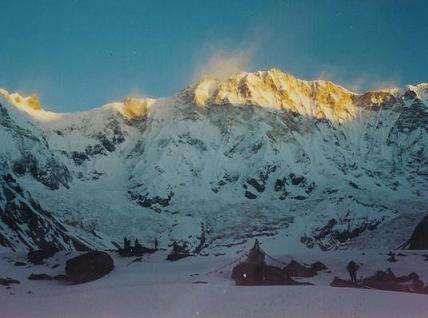
It was the last day of our trecking. We came back to Pochara. Hungry,
tired but really proud of the track we had made. The weather was excellent
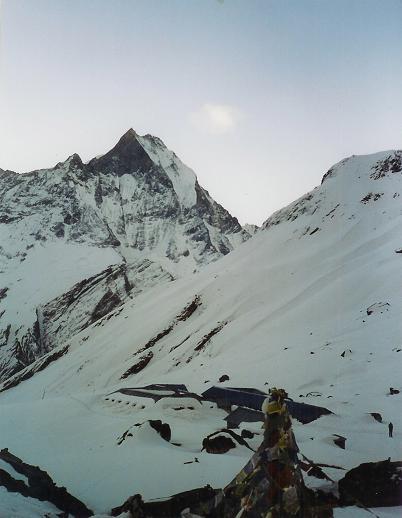
and Annapura again showed us her white head and I couldn’t believe that
just several days ago we were meeting the sun rising at the foot of this
beautiful mountain in Annapura Base Camp at a height of more then 4000
metres. And again we were in Pochara looking at Annapura from the
distance, walking through the streets and thinking about our travel.
It was seventh week of our journey and we had already visited lots of
places in India and Nepal and did lots of activities: we explored the land
of Sam Sand Dunes of Indian desert by walking in our own company without
any guides, looking for different birds and animals. We ate the food
prepared on the fire, slept under the starlit sky. We saw many beautiful
cities, among them, golden sandstone Jaisalmer with crenellated city
walls, romantic Udaipur, that is also called 'Venice of the East' and
‘pink Jaipur’ that has such name because of the ochre-pink hue of its old
buildings. We admired historic and architectural places such as:
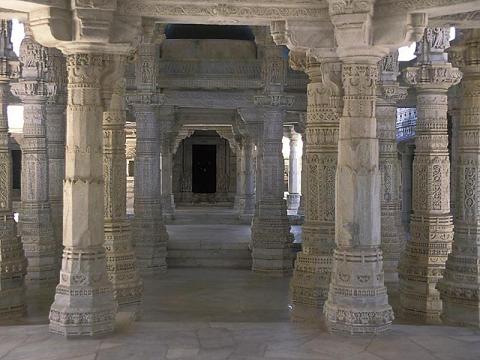
Chittaurgarh Fort with its unbelievable victory towers, patterned Dilwara
Jain Temples, impressive figures adorning the walls of Ellora and Ajanta
Caves, shining Golden Temple in Potan and that morning we completed a
treck in Annapura reserve…
Our money was finished and we stopped near the first bank. The sun was
shining brightly, playing on the screen of cash machine, so I pressed a
wrong botton and instead of 30 dollars received 300. My eyes became round
in perplexity. But, what is done cannot be undone.
India, Dharamshala, two weeks later
This lovely, small town in the North of India became a home for the
Tibetan government after China occupied Tibet. The town is located on the
mountain so most hotels and cafes are on the top, then administration
buildings, ministries and library are at the bottom. That morning we were
going to the library for a meditation lesson. The road went down through
the small forest and usually takes 45 minutes. In the middle of the way we
met an old monk who stopped. As we draw level with him he shook his
walking stick in front of me. What did it mean? After we reached the
library we appeared that the lesson would be in three hours.
Four hours later I was going back after the meditation lecture on my
own. My husband decided to spend time reading his book and stayed in the
hotel. I was walking and thinking all the way up about him. Why does he
hate Indians?
“What time is it?”, asked somebody.
I raised my eyes and saw an Indian guy. Being absorbed in my own
thoughts I didn’t noticed him standing on the cliff.
- What is the time?, asked somebody again.
I answered but the guy didn’t understand or made a sign that he didn’t
understand. He grabbed my arm like he wanted to see my watch and suddenly
threw chilli into my eyes. Then he pushed me from the cliff. He pushed me
more and more, farther and farther from the road. I nearly rolled down
with him through the bushes and sharp stones. From the first second I
realised that I was in trouble and started screaming as loud as I could,
hoping that the monks who were walking behind me would hear and help. But
it was all that I did. The guy was quite slim and not tall at all. But he
acted so confident: grabbed my arm, threw chilli to my eyes, pushed me
from the cliff, was all the time under me… My scream made him nervous and
next moment I saw a big stone under my head. In one-second time stopped
and I imagined this stone hitting my forehead and blood all round me and
me lying here in the bushes quite far from the road, far enough for nobody
to see me.
“What do you want?”, I asked.
But in that moment the guy took off my belt bag and released my arm. He
ran away one way and me in another. It was the happiest moment of my life.
I was free! I was alive! I was just robbed.
I don’t know why I did it but several minutes before the accident I
took all my money, about 200 dollars, from my belt bag and put it into my
pocket. So after the guy ran away with my bag I stayed with my money. I
imagined the face of him when he opened the bag and found all my
treasures: diary, sketching of landshafts, dried plants, Russian passport,
air ticket to Moscow, several credit cards, handkerchief, brush and other
things that can be useful just to the owner. In two minutes I crawled to
the road and saw a monk. I ran to him but he just looked at me,
understanding that something bad had happened but didn’t understand
English and was probably thinking: what must be, must be. In a second I
saw a European guy. He was more active: asked what happened, gave me water
to clean my eyes that were hurting, offered his help in catching the
robber.
In a minute I saw my husband who was coming to meet me. We visited the
doctor who looked at my eyes. In fact, my glasses saved them. Next was the
police officer who said: “we never get accidents in Dharamshala”.
In an evening I again visited the police station to take a copy of the
robbery report. The policeman said that I must change my story and say
that I lost my passport and air ticket without mentioning a robber and an
attack.
“I don’t want to change anything”, answered me.
“In this way you’ll be spend three months here until we don’t find this
bandit”, said policeman. “Ok, I’ve got time”, said me.
After this he gave me the paper that I wanted and a first accident was
mentioned in Dharamshala.
Deli, one week later
In Deli we visited the Russian embassy and received a letter that let
me returned home. We got another Indian visa and restored my air ticket.
For the last two weeks of our journey because my husband’s money was
finished we were using money that stayed in my pocket after the robbery.
What else can I say? What must be, must be.
Some information about our journey
|
During our journey we visited:
Deli,
Agra (Taj Mahal, Agra Fort),
Rajasthan, Jaipur (the capital of Rajasthan is popularly known
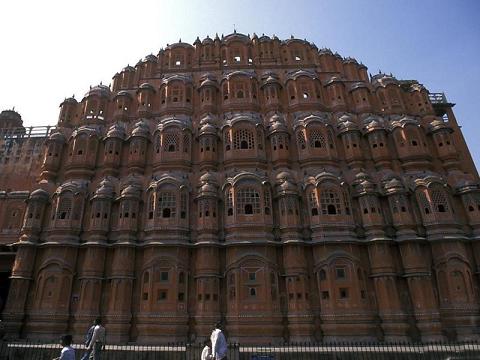
as the 'pink city' because of the ochre-pink hue of its old buildings and crenellated city walls.
Mehrangarh Fort, Jaswant Thada, Umaid Bhawan Palace, Mandore),
Bharatpur (the home of the world famous Keoladeo Ghana National
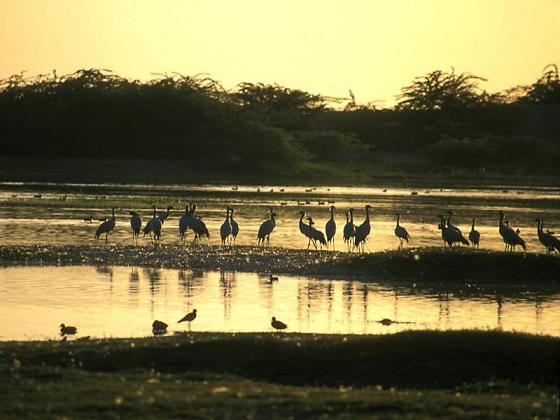
Park, one of the finest bird sanctuaries in existence. Apart from the rare Siberian crane, of which there are only about 4,000 in the world, colourful kingfishers, graceful pelicans, the transcontinental traversor, the migratory waterfowl are amongst 375 species of birds found here. The park is also full of other wildlife such as snakes, lizards, turtles, and wildcats. Of note the wildlife has included a tiger or two that have roamed into the park from another national park. We was looking for them, but of course don't find. Rent a bikes or a bicycle rickshaw and be sure to bring binoculars),
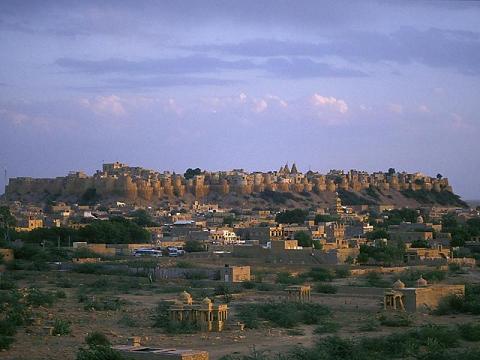
Jaisalmer (a golden sandstone city with crenellated city
walls, a magnificent fortress and a number of exquisitely carved stone and wooden havelis. We
recommend to see: Jaisalmer Fort and Palaces, Jain Temples),
Thar Desert
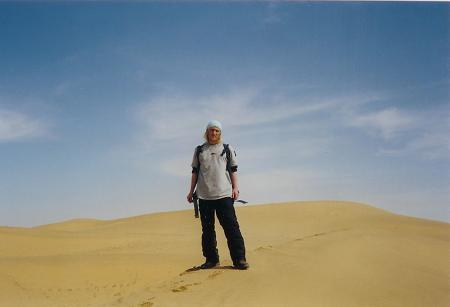
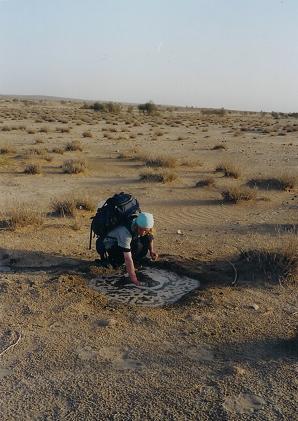
(we spent several days trekking in desert (you can take a camel trekking in Jaisalmer, but we explored the land of Sam sand dunes by walking in your own company without any guides and it was a great way to understand this place. Every day we were looking for lots of different birds and animals, met the sunrise and sunshine, ate the food preparing on the fire, slept under the starlit sky...we start trekking from Sam village, that situated 42 kms from Jaisalmer. For trekking you don't need anything particular. You can bay water in local villages, but
water in desert are a bit of salty), so we recommend take several bottle with you from Jaisalmer),
Bikaner,
Udaipur (the most romantic city in Rajasthan, built around the lovely Lake Pichola, has inevitably been dubbed the 'Venice of the East', the city is a harmonious Indian blend of whitewashed buildings, marble palaces, lakeside gardens, temples: City Palace, Lake Palace, Shilpgram, Kumbhalgarh Fort),
Chittaurgarh (the Fort, Victory Tower, Meera & Shyam Temple, Padminis Palace - lots of history and architectural thing to see. You'll be really impressed. The entrance in Fort there all this be found cast about 5 $ and better to take a rickshaw because Ford are in a bit of distance on the top of the hill separate from the town),
Mount Abu (walk for about five kilometers from Mount Abu and you'll see a Dilwara Jain TemplesUnbelievably beautiful. I can hardly believe that such craftsmanship has ever existed. If you are in Rajasthan visit this temple complex for sure. If you'll continue to walk you'll be see in seven kilometers Gaumukh Temple. It stands on the top of the mountain and you don't see it at once - clime for a little bit and you'll meet beyond expectations. We were sleeping just in 30 minutes walk from the temple and have got an amazing view from the top),
State of Maharashtra, Ellora Caves & Ajanta Caves near
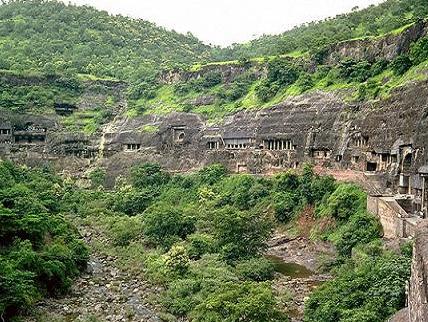
Aurangabad (Be sure to visit this plaices. It is probably the most awe-inspiring sight we visited in India. The cave shrines were all cut out of rock, by hand, and rank amongst some of the most outstanding specimens of ancient Indian architectural heritage. The 34 caves at Ellora and the 29 caves at Ajanta, were hidden from the public eye, till they were accidentally rediscovered in the 19th century. The caves were built as secluded retreats of the Buddhist monks, who taught and performed rituals in the Chaityas and Viharas, the ancient seats of learning, and nerve - centres of the Buddhist cultural movement. Using simple tools like hammer and chisel, the monks carved out the impressive figures adorning the walls of these structures. Exquisite wall - paintings and sculptures speak volumes of the India of yore. Many of the caves house panels depicting stories from the Jatakas, a rich mine of tales of the several incarnations of the Buddha. Images of nymphs and princesses amongst others, are also elaborately portrayed),
Mumbai,
Nepal, Kathmandu, Potan
Pokhara
Annapura (the best trekking season is between September and early December, although March and April are also popular. We was trekking at this time and weather was very good during all the way . There
are plenty of trekking companies, guides and porters to help arrange your trek. The service of
guide will cost you about 10$ per day, the service of porters 6$. Of course, you can easily
organise things yourself. In Kathmandu and Pokhara there are lots of shops that sells trekking
maps for the price from 3$ to 20$. During all way you can have hotel accommodation that would
be cost you from 0,5$ to 3$. Dinner about 3$. Then higher than more expensive. For the trekking
you'll be need sleeping bag, mountains boots, sunglasses, sun cream, warm clothes, waterproof
clothes, gloves, walking stick, map. There is an abundance of trekking shops in Kathmandu (try
Thamel or Freak St) and Pokhara. You can rent most items that you might need or just buy it -
the prices are low.
Trekking permits are issued by the Kathmandu and Pokhara immigration offices and will need to
be shown at police checkpoints along your route. It is still possible to get the permit at the first
check point, but you have to pay twice as much there. A normal trekking permit costs roughly
US$10 for Everest trekking and 20$ for Annapurna trekking. For using video camera you must pay
another 300$. Permits are available on the day of application and require passport photo.
Popular treks from Kathmandu include the Everest Base Camp, and the Helambu and Langtang
treks. The Everest Base Camp will be take about 24 days. From Pokhara, the most popular are
the Annapurna Circuit and the Jomsom trek. Annapurna Circuit and Jomsom trek will be take
about 20 days. For Annapurna Base Camp we spent 8
days. Less-travelled alternatives require more planning, but include the Kanchenjunga Base Camp
trek, the Dolpo region, Mustang and Rara Lake)
India, Shimla (the 'summer capital' of British India sprawls along a crescent-shaped ridge at an altitude of over 2100m (6890ft) in southern Himachal Pradesh).
Dharamshala,
Amritsar, Golden Temple (shining in the morning light, the gilded splendour of its panelling and big dome and small minarets, is the Sri Harmandir Sahib, also known as Sri Darbar Sahib or Golden Temple. The Temple's exterior is gold-plated and the structure stands in the middle of a square tank)
|
The Bean
Somebody made a gift to a girl from my company. Unique, personalised present was a bean. “Grow Your Own Name Bean Plant” – was written on the box. Within the gift box was a terracotta style pot that contained some compost and a bean that had been laser etched with a name. My collegue's name was Amanda. “Amanda” appeared on the bean. I do not know why, but Amanda did not keep the bean at her desk. She brought it to her good friend Susan, who was our receptionist. Susan was brilliant with the plants. We had several huge palms in the office and Susan looked after them perfectly. The palms were green, healthy and impressed all visitors entering building.
The company where I worked specialises in the transport and storage of gas and oil and was involved in building a new pipeline. It was a big project. Many people - about seven hundred employees were involved in removing and storing top-soil, creating the trench for the pipeline, welding the sections of steel pipe together, lifting pipes into the trench, reinstating the ground above and restoring the local landscape to its former appearance. It is pleasant to be part of such a big and important project, a project that delivers imported gas to areas where it is most needed. “I am part of the team” – I could say with a proud view.
|

(Although all events mention here had real place all names are changed)
|
Most of the staff who worked for the pipeline lived locally and had temporary contracts until the end of the work. Our office was temporary too. Even the office was a short-term building, it looked great. Our survey engineer made a project for this super construction. Big, accurate kitchen and dining area, high ceiling, clean toilet rooms made you feel comfortable inside. I enjoyed my room too. It was for two people: my boss and me, light and quite. My boss liked listening classical music. He introduced me to the structure and beauty of tremendous tunes. Bach, Mozart, Beethoven, Chaykovskiy were together with us, helping build the pipeline. I even sometimes imagined myself in the Orchestra Hall or Opera House at the piano recital or great concert of famous operatic singer.
I had one small plant in my room. It was given to me on my birthday by one of my colleagues. I am not very good with the flowers. I adore them, but do not understand. I think, only if you communicate with the flowers they become beautiful. You need love and care about them. I have no idea what exactly I did wrong, but the plant became pale, bleak, like mental patient of psycho hospital who was kept in four walls without fresh air and freedom. “What a terrible colour” – exclaimed me and called Susan. Susan did not do anything in particular, but plant became better. “I will care about this flower now,” – I thought. In a short time leaves appeared on it. “Look, your plant gave new babies” - told Susan pointing at three sprigs, like sharp spears peep out of the ground. It was magic.
But most magic was what happened with the bean. The reception room, where Susan worked, was situated near the entrance of the office. It was not only Susan’s room as the fax machine stood there and every time somebody needed to send a fax he or she visited Susan and of course we could watch the bean when we were waiting for the paper to go through. It’s only several seconds, but you could see a lot in this time. I think everybody looked at Susan's bean. Nothing changed in the room except unordinary, green string overran the wall. The bean looked different every day. After the bean was placed in the pot, watered and put on the table near the window, it started to grow. In a few weeks the shoots started to come through. Then, the bean emerged from the pot and shook off its nut shell. Soon leaves started to grow: one, two, three… Susan replanted the bean in a bigger pot and the green stick with several leaves enjoyed it. Bean probably imagined itself to be a fairy tale magic bean and started rising and rising, higher and higher. New baby-leaves appeared at that time every day: four, five, six… Name “Amanda” was missing now – it disappeared after the leaves became bigger. But the name was not important any more. Bean became important. I often couldn’t believe how quick it grew. It was simply a super bean, not in the league of others. The biggest excitement was when we visited the reception room after the weekends. We could see haw bean incressed its size. Was its aim to reach the sky? Susan placed some marks on the wall showing the progress of the bean. You could hear at reception: “Look, here is measurement of bean on the first of June and here on the sixth. Good result”.
The project progressed meanwhile. It was not only big, but difficult project. The pipeline crossed below watercourses, roads and rail lines and went across archaeologically and ecologically sensitive areas. It also passed National Park area. There was a big environmental problem on the section crossing under the river. We had problems with the weather as well. “You simply can not wager on the weather in England” – said some people in the company. One day rain started and continued, continued, trying to make in the middle of Britain big swamp and turned our workers into tadpoles. We joked sometimes pointing at our French Project Manager who came back to the office covered in mud: “People who work in Britain should never be afraid of rain”. It should also be stated that the company supported workers very well. One good turn deserves another. People worked very hard. It was a nice atmosphere in the office too. I will never forget our parties. It cost a lot to the company, but made people happy and closer to each other. The pipeline became longer and longer, like our bean. Our Project Manager could tell looking at the survey map: “Look here is measurement of pipeline on the first of June and here on the sixth. Good result”. Bean and pipeline grow together day after day, section after section.
Soon the project came to an end. “Once the pipeline is in the ground, we will be paying particular attention to restoring the local landscape; returning the topsoil, replanting hedgerows, restoring dry stone walls... Within a matter of months, the signs of our presence will start to disappear and by next summer, the path taken by the pipeline will be extremely difficult pick out” – was written in the report.
The company started dismiss workers. I remember Amanda was crying. She thought she would work till October. She wasn't happy to lose her job early. Amanda was a giggly girl with shining eyes. She worried about everyone. She worked in the Safety department. It was better to keep your mouth shut with Amanda and not tell her about any problems you may have. If not, Amanda would assail your difficulty with enormous eagerness and handle your problem until all invincible obstacles would push aside. She was victorious against any obstacles. “Look, I’ve organised it already. Come on. It would be good for you” – she usually said, persuading you. One day Susan said she is leaving. It was sad to hear this. You get used to people and then miss them. Susan likes backing. It amazed me, as Susan was all the time on the diet and did not eat any cakes by herself at all. But she loved bringing cakes for everybody to try. Susan left and no more chocolate bars or delicious scones, no more smile from Susan at reception. Where is she now?
I was still working. My main duty during the project was Invoices. People send you Invoices at the end of the work. I was very busy at that time. I was also busy because my boss was sent by the company to a different place. I was on my own. I was tald our main office are going to be deconstructed. All temporary buildings are going to be taken away one day. You knew it, but it is still very sad to leave used place, especially if you like it. I walked through the building – it was full of sweet memories, many sentimental things were still there, like a small candy vending machine that stood on the table at the kitchen. We had great fun with it. It had drop-through coin mechanism that accept twenty pence coins. You put money in the coin slot, slide the handle and outcome about fifteen glazed nuts. We have found the trick to take more sweets. If to turn one shrimpish screw underneath the machine - the machine would give you more nuts. Our engineer worked it out. A person of great intelligence could find ingenious solution.
It was a moving day. Everybody started packing and moving furniture. All doors became open. Suddenly I heard the screams coming from the main hall. It was a bird flying around inside the building being unable to find a way out. She winged a way through the air like little feathered fighter aircraft making some girls scream: “A-A-A a terrible bird, take this bird out. A-A-A”. The bird hit the windows and became very stressed. Soon small softling fell down. Still breathing body was thrown off the window. Bird didn’t fly – one of her leg was broken. I thought if Susan was there she would defiantly take the bird to veterinary. I remember one day Susan showed me a rabbit. She picked up the rabbit off the road. Rustic rabbit was bumped by the car and Susan could not drive away without helping him.
Next day I saved several birds trapped in the building. I opened windows and made birds free. I found the bean that day too. I have not visit the reception for a while. The room as I entered looked empty. I could not see the bean. Then, it appeared. It was in the corner. It was dead. Plastic pot was turned over, emarcid, dry leaves looked brown and withered. It was unbelievable to find our great, super bean in such condition. Nobody cared about it any more. The bean had gone with Sue.
Three guys come to my room and said they are here to move all my files to container outside. It was pimping, corroded, cold container, but there was not enough space in the new building for all documentation. While moving the cabinets to the container, the workers made a mistake and mixed all the files. I corrected mistake putting files by right order in correct cabinet, but it was sad to see such chaos round. During many months my boss and me care trying to do job properly. Some people in the company criticised my boss for being pedantic. He was very accurate and all job was done unexceptional. I tried following the same way. What would be when I left? Who would care?
I saw one more colleague very upset yesterday. It was Frank. He has not been temporary worker and been with the company for more than several years. But project finished, company did not need Frank any more. Frank was given a month’s notice. During the time of the project Frank was very enthusiastic about his job. He really worried for pipeline. He came to his boss to talk, but boss did not look to be care. He had so much on his mind. Good feelings of Frank towards the pipeline died. Frank was an important part of the project. He said he was thrown away like used clove. Frank still need to finish his work - important part of the job he did. Will he finish it now? He also said he would go to the court and make lots of trouble. I think Frank's boss after this probably would think: “this guy is simply bossing up the whole show”.
I felt very sorry for Frank and a bit guilty because my boss phoned me and said the company giving me a bonus for good job. It is not much,
but very pleasant. Thank my boss for his kind thought of me. I am leaving the pipeline with good feelings being really proud for the job
I did. Today is my last day. I tried to complete all important moments, explained other girl that she needs to do to maintain my job. I
left her with some Invoices that already were paid, but not input in our database. Suddenly one idea appeared in my mind: “Will she input
them or maybe just throw them away. I hope she will. I hope the people who really care for the pipeline will bring the
project to the end. After all, any business no matter what it is: bean cultivation or construction of the pipeline, family relations or
two business partner’s communication, stamp’s collection or child-rearing practice will be successful if there is somebody who caring for
it.